
Fraud investigator jobs sit in three places: insurance company investigation units, banks and other financial institutions, and government agencies. Some insurers will hire you with a high school diploma, while a bank posting may ask you for a bachelor’s degree and three years of experience. This guide shows what each employer asks for, how a case moves from referral to report, and where forensic accounting coursework fits.
What Does a Fraud Investigator Do?
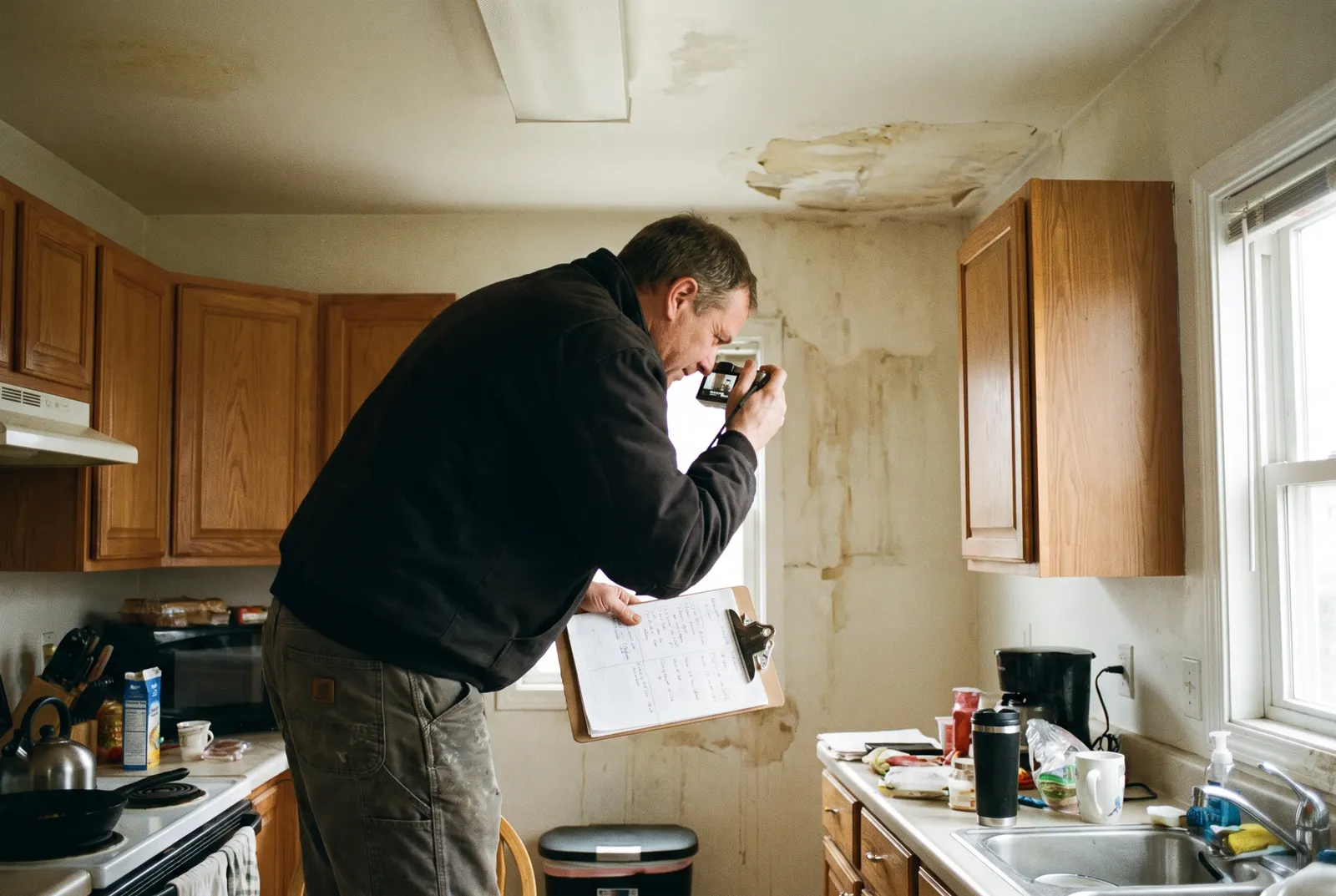
A fraud investigator works out whether money was taken, hidden or misreported, then builds the file that proves it. O*NET describes the job as obtaining evidence, taking statements, producing reports and testifying to findings on fraud allegations. You’ll interview witnesses and suspects, gather financial documents and coordinate with law enforcement officers and attorneys. Some of your cases will end up in court.
The task O*NET rates highest is the least dramatic one: documenting every investigative activity. Your notes, dates and copies of records are what make a case hold up months later. If you like building a timeline from paper and screens, that’s the daily rhythm of the work.
Titles vary from one employer to the next. O*NET lists financial crimes investigator, financial investigator and fraud analyst among the names for this work, and insurers often say SIU investigator. You’ll want to read the duties in a posting instead of trusting the title. Our guides to fraud examiner and fraud analyst jobs cover the neighboring titles.
One caution before any numbers. The BLS has no line for fraud investigators. Its closest match is claims adjusters, examiners and investigators, a group that also counts the adjusters who settle ordinary claims. You should read what we cite from it as a guide, not as a headcount of fraud investigators.
How Does a Fraud Investigation Move From Referral to Report?
Sources describe the same arc whether the employer is an insurer, a bank or an agency.
-
A suspicion comes in. At an insurer, an adjuster spots a red flag. GEICO says its unit teaches claims staff to look for red flags.
-
You gather records. O*NET lists gathering financial documents as a core task. A health insurance investigator on Reddit describes searching internal, external and public records databases and requesting medical records.
-
You talk to people. Interviewing witnesses and suspects and taking statements is another core task. For some insurance cases you may also do surveillance, which the BLS says investigators often do.
-
You write it up. Your report has to rest on evidence and data. At a bank, that can mean drafting a suspicious activity report (SAR), the report a financial institution files on suspicious transactions.
-
You hand it on. The case goes to a manager, police, a prosecutor or an attorney, and sometimes you testify.
Who Hires Fraud Investigators?
Three kinds of employers account for most of these jobs, and they ask for different things. The table puts them side by side before we walk through each one.
| Employer | Common job titles | What the sources say they ask for |
|---|---|---|
| Insurance companies | SIU investigator, intake specialist, screening investigator | A high school diploma is the BLS norm for investigator jobs. Some insurers prefer law enforcement or private investigator backgrounds. Licensing varies by state. |
| Banks and other financial institutions | Fraud investigator, financial crimes investigator | One staffing firm’s description asks for three years of experience and a bachelor’s degree in business, finance or a related field. |
| Federal inspector general offices | General investigator, criminal investigator (special agent) | Criminal investigators complete federal basic criminal investigative training or its equivalent. |
| County and state governments | Investigator | Los Angeles County recruits accounting graduates for investigator positions. |
Insurance Special Investigations Units
Insurance is where the BLS group lives. Direct insurance carriers (excluding life, health and medical) employ 35 percent of it, insurance agencies and brokerages 29 percent, and the federal government 13 percent. The BLS says insurance investigators handle claims where the company suspects fraud or crime, such as arson, staged accidents or unnecessary medical treatment. Your cases could run from an overstated vehicle repair to an organized fraud ring.
Big insurers build whole teams around this. The Hartford says its special investigations unit identifies fraud trends, uncovers suspect claims and runs investigations. It has dedicated teams for medical fraud and abuse, fire investigations, premium evasion and life claims. GEICO says its unit is composed mainly of people with extensive law enforcement experience as well as insurance knowledge, and that it works with local, state and federal law enforcement.
Industry-wide, the National Insurance Crime Bureau counts more than 1,200 property-casualty insurers among its members. Its nearly 400 employees work with law enforcement agencies and prosecutors, so it’s another place where you can find insurance fraud work.
What’s the work like? A health insurance investigator posting on Reddit’s r/FraudPrevention says they review healthcare claims, request medical records and interview members and providers. Their verdict: “I love it. It’s a bit academic due to researching current laws and policies, calls for high attention to detail with minimal errors.”
You should expect irregular hours too. The BLS says early morning, evening and weekend work is common, because you have to reach people when they’re free.
Banks and Financial Institutions
Banks hire fraud investigators to look into confirmed and suspected fraud and related financial crimes. Robert Half’s description of the role asks for at least three years of experience and a bachelor’s degree in business, finance or a related field.
Your duties would include interviews, drafting SARs and filing police reports as necessary. Experience writing SAR narratives is preferred, so any chance you get to practice that kind of report writing helps.
Bank fraud teams sometimes fill seats from inside the building. In one r/AMLCompliance thread, a commenter wrote: “Started at the local credit union as a teller. Moved into fraud for a couple of years and then transitioned to aml/compliance.” That second step leads toward anti-money laundering (AML) work, which our financial crimes investigator guide covers if you want to see where fraud experience can lead.
Government Agencies and Inspectors General
Government work splits into two tracks, and the difference matters for you. Each Office of Inspector General (OIG) investigates fraud in its own department’s programs. The Department of Health and Human Services OIG says its Office of Investigations looks into criminal, civil and administrative fraud and misconduct tied to its programs. It hires special agents with full law enforcement authority.
It also hires general investigators in the General Schedule (GS) 1810 series for fraud investigations, a path separate from criminal investigators. Investigative analysts, in the 1805 series, analyze data to build trends and profiles for the agents. If you’d rather not carry a badge, the general investigator and analyst paths are worth a close look.
The criminal investigator track has stricter rules. An Interior Department OIG announcement for a GS-13 special agent listed research and analysis of financial and accounting data, interviewing witnesses, and writing investigative reports supported by evidence. It expects the Basic Criminal Investigative Training Program at the Federal Law Enforcement Training Centers or its equivalent.
That same announcement caps entry into the 1811 series at age 37, unless you have prior creditable law enforcement service. It says there’s no educational requirement, but it asks for a year of specialized experience at the next lower grade. So if you’re set on this track, plan for experience and training, not just a degree.
Smaller governments recruit accountants. Los Angeles County’s Office of County Investigations says it is seeking accounting graduates to investigate fraud, embezzlement and official misconduct by county employees and officials. It adds that you’d have a chance to earn qualifying hours toward the certified public accountant license and the Certified Internal Auditor and CFE credentials.
Washington’s State Auditor lists accounting, forensic accounting, auditing, criminal justice, cybersecurity and business as popular courses of study for anti-fraud work. It names investigation in the private or public sector as one of three common paths. If you want to be the agent who testifies, see our guides to the IRS special agent and FBI forensic accountant jobs.
Do You Need a License to Be a Fraud Investigator?
It depends on your state and on who signs your paycheck. The BLS says licensing requirements for claims adjusters, examiners and investigators vary by state. Some states have few requirements, while others require prelicensing education, a licensing exam or both. In some states, adjusters employed by insurers can work under the company’s license. You should verify the rules where you want to work.
Florida’s law is one worked example. Its private investigator chapter, Chapter 493, doesn’t apply to an insurance investigator or adjuster licensed by a state or federal authority when acting within that license.
It also exempts an unarmed investigator who is solely, exclusively and regularly employed by one employer. In plain terms, Florida carves out people who investigate for a single employer and people licensed as insurance investigators or adjusters. Other states word it differently, so check your own state’s statute or call its insurance department before you take a contract job.
There’s also a voluntary credential. O*NET lists the Certified Insurance Fraud Investigator (CIFI) program, an accrediting process for people with the skills to detect, investigate and deter insurance fraud. It renews every three years. Government investigators don’t need a license, but you will need the training described above.
How Do You Become a Fraud Investigator?
Most people arrive sideways, from a claims desk, a bank branch or a police department, and then specialize. One route fits what the sources describe.
| Step | What you do | Why it helps |
|---|---|---|
| 1. Pick an employer type | Choose insurance, banking or government before you choose a degree. | Each employer type hires through different doors, so the later steps look different for each. |
| 2. Build your base | Earn a bachelor’s degree, or gain relevant experience. | Most O*NET respondents say a new hire needs a bachelor’s, while the BLS says a high school diploma is typical for insurance investigators. |
| 3. Start next door | Take a claims, teller, intake, customer service or audit job. | Reddit threads describe people entering fraud work from teller, customer service and insurance intake jobs. |
| 4. Practice the core skills | Learn interviewing, evidence handling and report writing. | These are the tasks postings and agencies list, and they’re what coursework can teach you. |
| 5. Add a credential | Work toward the CFE or an insurance-specific credential. | The ACFE sets clear point and experience rules, shown below. |
For step 5, a bachelor’s degree or equivalent earns you 40 qualifying points under the ACFE’s rules, in any field of study, and you can sit the exam once you reach 40 points. You need at least two years of professional experience related to detecting or deterring fraud by the time you’re certified.
Investigating suspected financial misconduct counts, including collecting evidence and tracing assets. The exam has three sections: Fraud Schemes and Financial Crimes, Fraud Investigations and Legal Issues, and Fraud Prevention and Deterrence. For a deeper look at the credential, read our Certified Fraud Examiner guide.
How Does Forensic Accounting Coursework Prepare You?
Postings ask for interviewing, evidence handling, document analysis and clear reports. Programs we track teach those exact skills, and you can see it in their course descriptions. You don’t need a forensic accounting degree to qualify, but if you’re choosing a program anyway, check which of these skills it covers.
| Skill | Course example | What the course covers |
|---|---|---|
| Interviewing | ACC 425 at Southern New Hampshire University | Characteristics of fraudsters, interview strategies and questioning techniques applied to scenarios |
| Interviewing | CJ 225 at Marywood University | Interviewing and interrogation, in the senior-year plan |
| Evidence and court | AC465 at Purdue University Global | Collecting evidence, providing legal support and testifying in court |
| Evidence and court | MFF 721 at Carlow University | Rules of evidence, constitutional protections and obtaining reliable evidence for trial |
| Digital evidence | AC468 at Purdue University Global | Collecting, preserving and analyzing digital evidence |
| Digital evidence | CFDI 240 at Champlain College | Labs in a forensic virtual desktop using X-Ways Forensics, FTK Imager, Autopsy and EnCase |
| Whole examination | SBU 572 at Seton Hill University | Planning an examination, analyzing documents, interviewing suspects and using data analysis to trace transactions |
Two courses read almost like job descriptions. Carlow’s MFF 733, Comprehensive Fraud Investigation, is a 4-credit course covering the steps in an investigation, gathering and documenting evidence, the interview and interrogation process and report writing. Southern New Hampshire University’s ACC 427, Investigating with Computers, has you present findings and conclusions to internal stakeholders. That’s the skill you use when you brief a manager.
Marywood’s financial crime investigation program lists criminal investigator and financial crimes investigator among its career paths. It teaches you to use financial and investigative technologies to gather and communicate evidence.
Of the 65 programs we track, 27 state CFE exam preparation. By level, you can choose from 22 bachelor’s, 27 master’s and 16 certificate programs.
If you already work in claims or banking, our list of forensic accounting degrees for working adults shows programs built around a job. If you want the investigation-heavy path, start with our master’s in fraud examination list. You can see every program on the all programs list.
What’s the Job Outlook for Fraud Investigators?
Be ready for a mixed picture. The BLS projects the wider group of claims adjusters, appraisers, examiners and investigators to decline 6 percent from 2025 to 2035. It says software can already evaluate photographs of damaged property and calculate an estimated claim amount, and that data processing speed and artificial intelligence will keep improving.
Even so, about 21,600 openings a year are projected, all from people moving to other occupations or leaving the workforce. So you shouldn’t expect fast growth, but you can expect turnover.
And the people doing the work know the downsides. One r/AMLCompliance commenter who works as a money laundering investigator says: “Do I enjoy it? Eh, it pays well, but can be tedious and frustrating at times.” That’s a fair warning, and you should hear it before you commit to the work.
The median wage for the closest BLS group was $78,000 in May 2025. We break pay down by employer, state and federal grade in our fraud investigator salary guide, and the state table below shows every state’s median.
Claims Adjusters, Examiners, and Investigators Pay by State
In May 2025, the Bureau of Labor Statistics reported a median annual wage of $78,000 for claims adjusters, examiners, and investigators nationwide, with the middle half earning between $61,160 and $98,030. About 324,230 people held these jobs.
District of Columbia had the highest published state median at $101,150, and Nevada the lowest at $62,730. The table lists every state where the Bureau of Labor Statistics publishes a median for this occupation.
| State | Median | 10th Percentile | 90th Percentile | Jobs |
|---|---|---|---|---|
| District of Columbia | $101,150 | $70,240 | $144,680 | 360 |
| New Jersey | $95,690 | $61,780 | $129,720 | 9,650 |
| Maryland | $95,560 | $53,190 | $135,040 | |
| California | $91,790 | $60,020 | $124,990 | 24,290 |
| Connecticut | $88,330 | $63,090 | $129,740 | 3,190 |
| Alaska | $87,670 | $62,200 | $132,200 | 220 |
| New York | $87,130 | $51,560 | $130,370 | 17,330 |
| Rhode Island | $86,520 | $60,290 | $130,480 | 1,150 |
| Vermont | $83,970 | $62,360 | $118,500 | 280 |
| New Hampshire | $83,890 | $59,580 | $120,430 | 880 |
| Massachusetts | $83,740 | $58,650 | $123,260 | 5,070 |
| Oregon | $81,640 | $56,320 | $117,380 | 2,950 |
| Washington | $80,700 | $50,080 | $122,840 | 6,180 |
| Alabama | $79,710 | $49,190 | $106,370 | 4,040 |
| Hawaii | $79,080 | $51,830 | $106,690 | 900 |
| South Dakota | $78,900 | $58,160 | $104,190 | 1,030 |
| Michigan | $78,850 | $48,210 | $109,000 | 6,640 |
| Texas | $78,800 | $46,560 | $116,610 | 29,220 |
| Maine | $78,590 | $60,180 | $104,490 | 1,650 |
| Minnesota | $78,350 | $58,110 | $106,270 | 5,530 |
| Wisconsin | $78,160 | $50,570 | $103,620 | 8,760 |
| Tennessee | $78,010 | $47,310 | $108,890 | 6,390 |
| Colorado | $77,620 | $59,550 | $123,360 | 5,680 |
| Idaho | $77,340 | $49,940 | $117,100 | 1,320 |
| Kansas | $77,290 | $48,980 | $112,710 | 4,570 |
| Pennsylvania | $77,290 | $46,360 | $119,980 | 13,270 |
| Mississippi | $77,100 | $48,680 | $100,850 | |
| Illinois | $77,010 | $48,620 | $118,810 | 14,210 |
| Florida | $76,920 | $47,030 | $105,150 | 28,100 |
| Wyoming | $76,400 | $48,790 | $126,440 | 180 |
| Missouri | $75,840 | $48,900 | $111,070 | 6,200 |
| Nebraska | $75,830 | $50,170 | $102,250 | 3,160 |
| South Carolina | $75,370 | $46,640 | $104,050 | 4,130 |
| North Carolina | $75,310 | $48,200 | $108,630 | 9,880 |
| Virginia | $74,240 | $49,140 | $109,970 | 7,860 |
| Arkansas | $73,920 | $46,490 | $103,420 | 2,660 |
| Kentucky | $73,840 | $52,600 | $100,400 | 3,670 |
| Indiana | $73,560 | $48,660 | $101,270 | 4,340 |
| Georgia | $73,320 | $51,000 | $103,080 | |
| Iowa | $72,640 | $50,360 | $102,900 | 3,930 |
| Delaware | $72,370 | $51,430 | $116,710 | |
| Oklahoma | $71,260 | $47,440 | $100,240 | 4,140 |
| Utah | $69,000 | $46,120 | $100,970 | 2,440 |
| Ohio | $67,990 | $47,950 | $104,870 | 13,650 |
| New Mexico | $67,930 | $40,620 | $101,520 | 1,280 |
| West Virginia | $67,290 | $45,650 | $106,330 | 1,340 |
| North Dakota | $65,460 | $47,960 | $97,470 | 750 |
| Louisiana | $65,220 | $42,160 | $102,240 | 3,340 |
| Arizona | $65,110 | $47,990 | $100,590 | 13,830 |
| Montana | $63,860 | $46,080 | $101,390 | 1,230 |
| Nevada | $62,730 | $43,800 | $98,920 |
Frequently Asked Questions About Fraud Investigator Jobs
Is It Hard to Become a Fraud Investigator?
How Do I Become a Certified Fraud Investigator?
How Do You Get a Job as a Criminal Investigator?
Can Fraud Investigators Work From Home?
Do Fraud Investigators Carry Weapons or Make Arrests?
What Is the Difference Between a Fraud Investigator and a Fraud Analyst?
Sources
- Fraud Examiners, Investigators and AnalystsClaims Adjusters, Examiners, and InvestigatorsCertified Insurance Fraud Investigator
- Claims Adjusters, Appraisers, Examiners, and Investigators: Occupational Outlook HandbookOccupational Employment and Wage Statistics, May 2025
- Special Investigations Unit
- Special Investigations Unit
- About the National Insurance Crime Bureau
- Fraud Investigator Job Description
- Careers in the Office of Investigations
- Criminal Investigator (Special Agent) Announcement
- Fraud Investigator Certificate (FIC)
- Careers in the Office of County Investigations
- Interested in Becoming an Anti-Fraud Professional? Here's How to Get Started
- Florida Statutes, Chapter 493
- CFE Credential EligibilityAbout the CFE Exam
- Special Agents
- Interested in career as fraud analyst
- How do I get my foot in the door in becoming a fraud specialist or analyst?
- School program and tuition pages (each review links the pages we checked)
Sources retrieved to .